

Sawn sandstone block walls
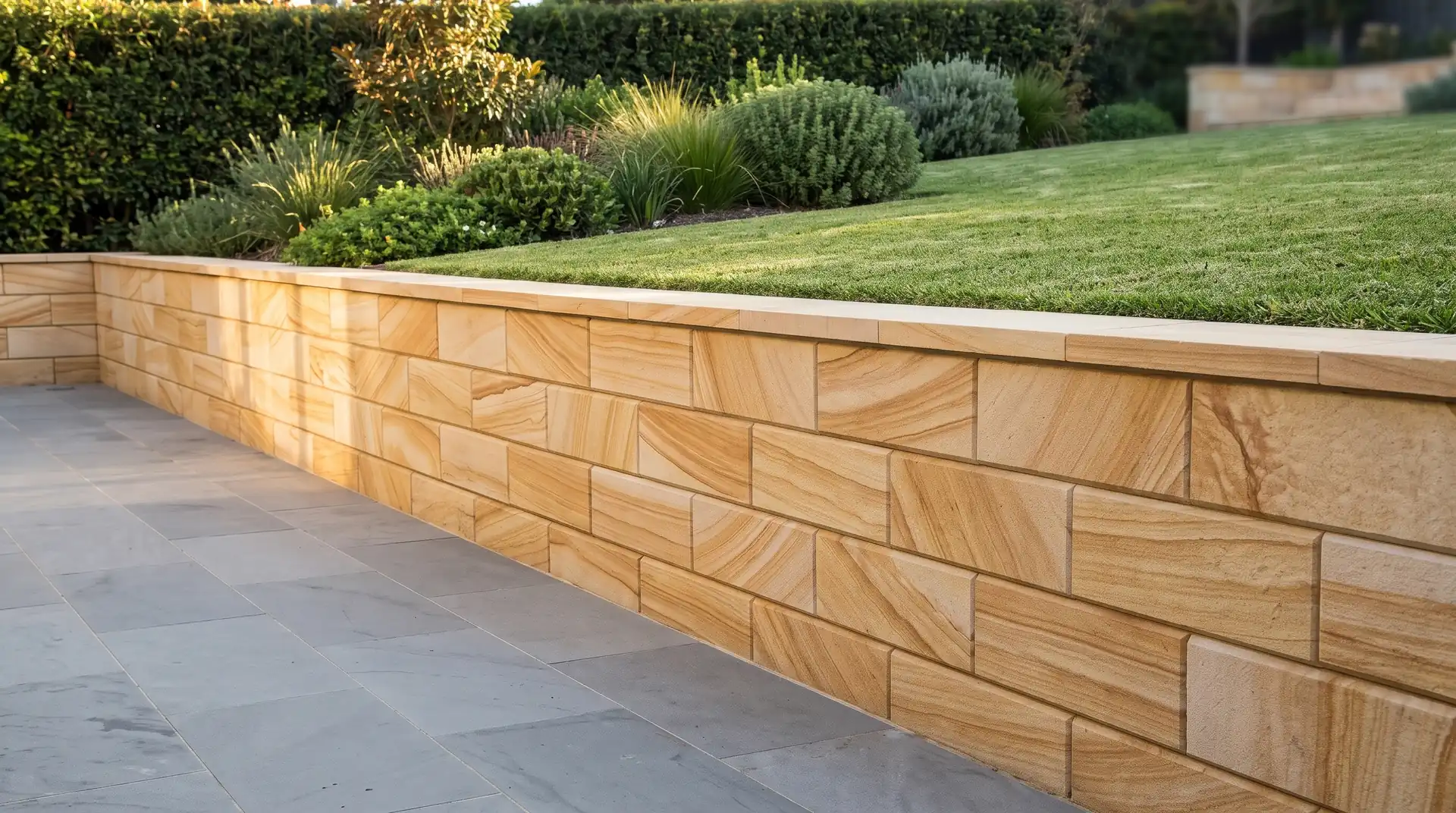
Diamond-sawn blocks have smooth, flat faces and crisp edges. They lay in tight, even courses and suit modern homes, pool surrounds and formal garden terraces where clean lines matter.
Newcastle and Lake Macquarie
Sawn, split-face and rock-face sandstone walls for sloping blocks across Newcastle and Lake Macquarie. Tell us about your site once and we will pass your enquiry to an independent local retaining wall specialist.
Get a Price for Your Wall
Free to use. No obligation.
Holding back a steep backyard, replacing a bowing sleeper wall or levelling a garden for lawn and play space? Start with a quote based on your actual slope.
If you are looking for sandstone retaining walls in Newcastle, chances are you have a slope that is starting to cause trouble: soil washing onto paths after rain, an old sleeper wall leaning outwards, or a backyard too steep to use. A well-built natural sandstone retaining wall holds that soil back, creates level ground you can actually use, and gives the garden a solid stone finish.
Sandstone is a sedimentary rock made of cemented sand-sized grains, mostly quartz. Built on good footings with proper drainage behind it, a sandstone retaining wall can last for decades.
The harder part is finding the right person to build it. Retaining walls involve excavation, drainage, sometimes engineering and sometimes council approval, and the price changes from one site to the next. Sandstone Retaining Walls Newcastle takes the legwork out of it. You tell us about your wall once, and we connect you with an independent local specialist who can look at the site and quote it properly.
Enquiries are welcome from across Newcastle and Lake Macquarie, from Merewether and Lambton to Charlestown, Warners Bay and Toronto.
The finish you choose changes how a wall looks and where it suits. Sandstone walling comes in rock-faced, split-face and diamond-sawn finishes from Australian quarries, and block sizes vary from one supplier to another, so your specialist will talk you through the sandstone blocks available for your design.
Diamond-sawn blocks have smooth, flat faces and crisp edges. They lay in tight, even courses and suit modern homes, pool surrounds and formal garden terraces where clean lines matter.

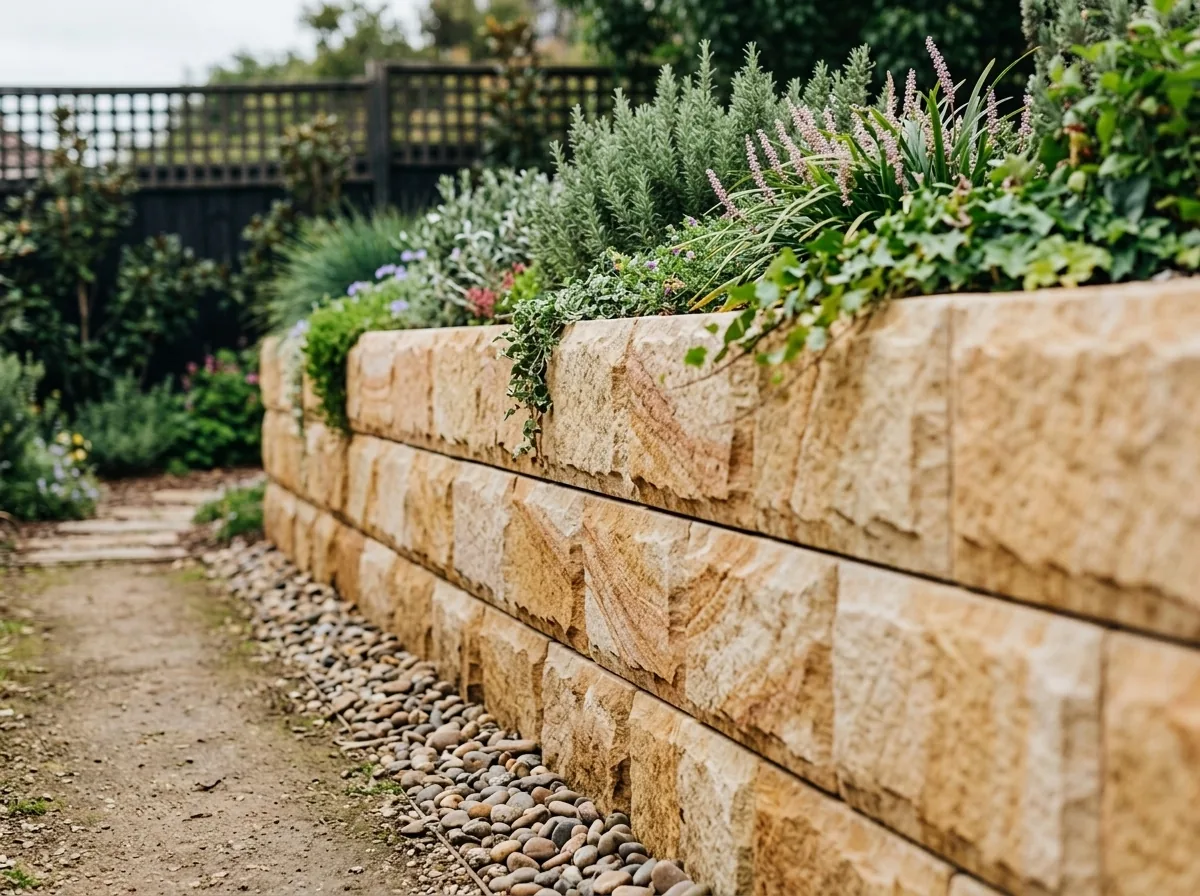
Split-face stone, sometimes called hydrasplit, is machine split to give a textured face on a regular block shape. It sits between the smooth sawn look and the rugged rock-face style, and works well along front yards and driveways.

Rock-faced, or pitched, sandstone has a chiselled face for a rugged, traditional look. It suits older homes, bush-style gardens and larger walls where you want the stone to feel natural.

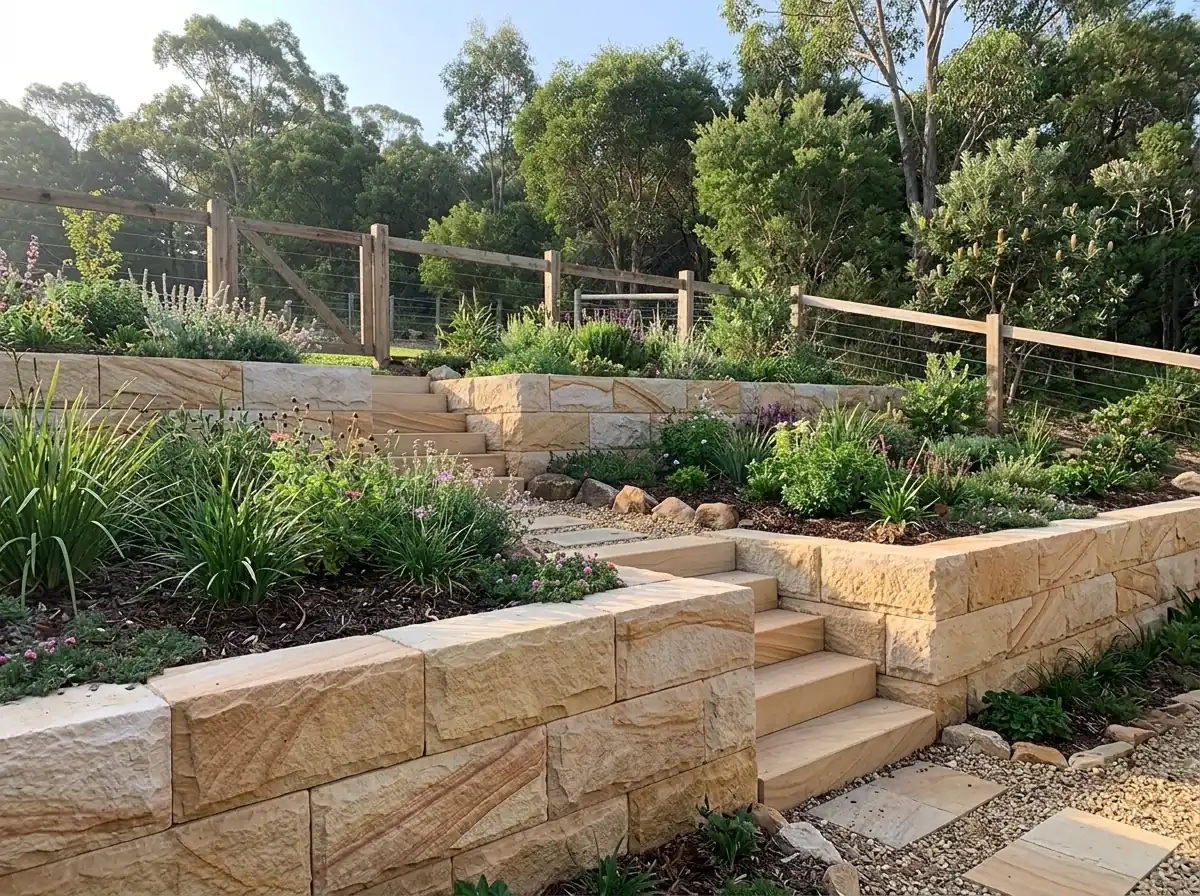
Taller retaining walls use heavier, deeper stone such as large squared blocks, billets or split logs, and they need engineering. Your enquiry can also cover terraced garden walls, sandstone steps and edging, or repairing and replacing a failing wall.
Not sure which finish suits your home? Mention it in your enquiry and your specialist can talk through the options when they see the site. If you already have stone or a design in mind, include that too.
Getting a sandstone retaining wall priced should not mean chasing tradies for weeks. Here is how an enquiry works, and there is no cost to you at any step.
Send your suburb and a few details, such as roughly how long and how high the slope is and which stone finish you like. It only takes a couple of minutes.
An independent local retaining wall specialist looks at the slope, soil, access and drainage, and works out whether your wall needs council approval or engineering. Before any digging starts, they should lodge a free Before You Dig Australia enquiry to get plans of underground services from the asset owners.
You get a quote based on your actual site, not a guess. Ask your specialist to explain what is included, such as excavation, footings and drainage. There is no obligation to go ahead, and you decide if and when the work starts.
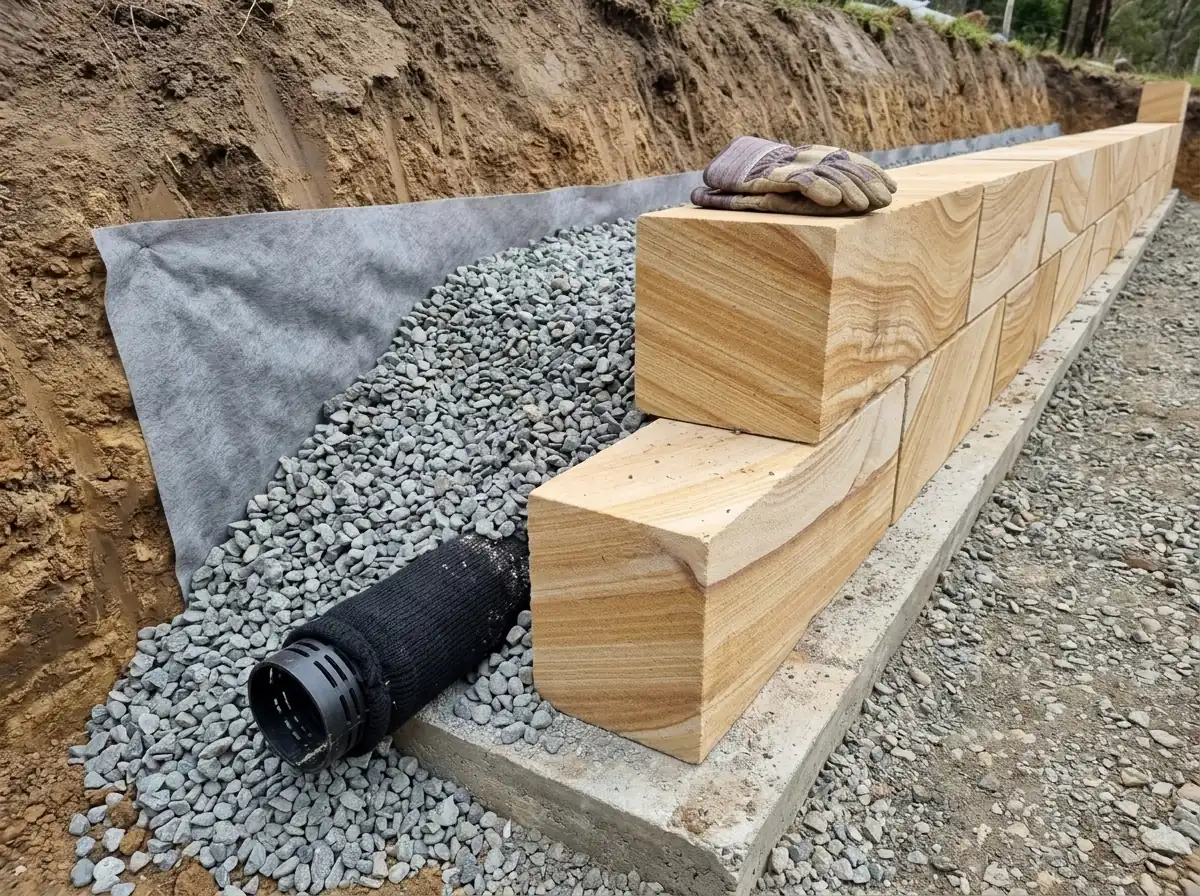
A sandstone wall is only as good as what sits behind and beneath it. These are the things worth getting right, whoever builds yours.
In NSW, a contractor licence is needed to do, advertise or contract for residential building work worth more than $5,000 in labour and materials, and a permanent retaining wall supporting a dwelling counts as residential building work. Walls that need approval must be built by holders of a structural landscaping or general building licence. Ask any provider for their licence details and confirm them with the NSW home building licence check before you sign, and never pay money without a written contract.
Under the NSW complying development standards, a retaining wall supporting more than 600mm of cut or fill must be certified by a professional engineer. Engineers design earth-retaining structures to Australian Standard AS 4678, and every retaining wall must be structurally adequate and comply with the Building Code of Australia.
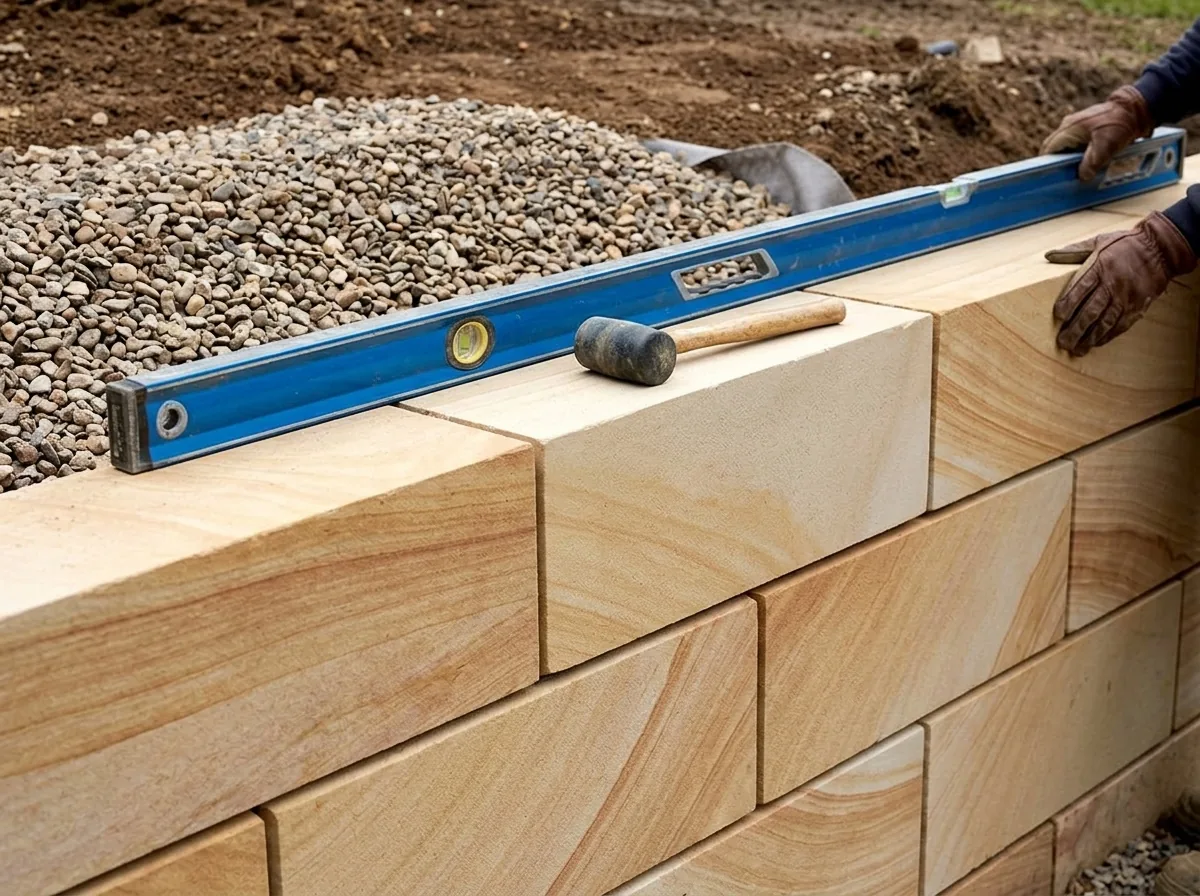
Good retaining wall drainage typically uses a slotted ag pipe at the base in a filter sock, free-draining gravel backfill, geotextile fabric between the gravel and the retained soil, and discharge to a lawful point such as the site's stormwater system. The final design follows your engineer or council.
Sandstone Retaining Walls Newcastle is a free enquiry service. We pass your details to an independent local specialist, who quotes and carries out the work directly with you.
Published Newcastle cost guides put installed sandstone retaining walls from about $330 per lineal metre for a wall around 1m high. Engineered sandstone block walls are often $600 to $900+ per square metre of wall face, plus engineering. Height, stone grade, site access, excavation and drainage all change the price, so every site is quoted individually.
The price reflects much more than the stone. Height, stone grade, site access, excavation and drainage all drive the final figure, and a wall supporting more than 600mm of cut or fill also needs certification by a professional engineer under the NSW complying development standards. That is why a specialist needs to see your site before quoting.
Not always. Under the NSW Codes SEPP (Part 2, Division 1, Subdivision 15), a retaining wall is exempt development only if it meets every standard. These include cut or fill of no more than 600mm, at least 1m from any boundary, easement, sewer or water main, at least 2m from any other retaining wall, and adequate drainage connected to stormwater. It also cannot be on a heritage item, a flood control lot or in an environmentally sensitive area. The NSW Planning Portal guidance on exempt retaining walls sets out the standards. Anything beyond them needs a complying development certificate or a development application. For advice specific to your site, we can connect you with a local specialist who deals with these approvals.
The exempt limit is set on the earthworks rather than the wall itself: the cut or fill can be no more than 600mm above or below existing ground level, and every other exempt standard must also be met. Beyond that you need a complying development certificate or a development application, as explained in the City of Newcastle retaining wall guide. Newcastle Development Control Plan 2023 also has controls for retaining walls, such as landscape softening of front-setback walls over 600mm. In Lake Macquarie, check council's development control plan or ask council. For advice specific to your site, we can connect you with a specialist who knows the local rules.
Under the NSW complying development standards, a retaining wall supporting more than 600mm of cut or fill must be certified by a professional engineer, and councils may also ask for engineering through a development application. Taller walls use heavier, deeper stone such as large squared blocks, billets or split logs, and engineers design earth-retaining structures to Australian Standard AS 4678. For advice specific to your site, we can connect you with a specialist who works with engineers.
Yes, when it is built well. Sandstone is a sedimentary rock of cemented sand-sized grains, mostly quartz, and a sandstone retaining wall with good drainage and footings can last for decades. How long yours lasts depends on the stone, the design, the drainage and your soil. Sandstone is also porous, so ask your specialist about sealing options.
They are different finishes on the stone face. Diamond-sawn sandstone is smooth with crisp edges, split-face (or hydrasplit) is machine split for an even but textured face, and rock-faced (pitched) stone has a chiselled, rugged face. All three are available from Australian quarries, and block sizes vary by supplier.
Often, but plan for it from the start. A fence on top of or attached to a retaining wall adds load, including wind load, so the wall and its footing need to be designed for it. Check with an engineer and council before adding one. For advice specific to your site, we can connect you with a specialist who can factor the fence into the design.
In Newcastle, the landowner who excavates or fills their land is responsible for the retaining wall. For a shared boundary wall, neighbours need to agree on the costs, and council cannot mediate. Under the Dividing Fences Act 1991 (NSW), costs are only shared where the wall is needed to support the dividing fence. For anything else, get legal advice for your situation.
Good drainage typically uses a slotted ag pipe at the base behind the wall in a filter sock, free-draining gravel backfill (commonly at least 300mm), geotextile fabric between the gravel and the soil, weep holes in solid walls, and discharge to a lawful point such as your stormwater system. These are typical practice rather than legal rules, and the final design follows your engineer or council.
Enquiries are welcome from homes across the City of Newcastle and Lake Macquarie, including the suburbs below. If yours is not listed, send an enquiry anyway and we will let you know.
Newcastle and Lake Macquarie both have declared Mine Subsidence Districts. If your property is in one, you may need approval from Subsidence Advisory NSW before you build, although small retaining walls may be exempt under its current exempt list. Check your address against the Subsidence Advisory NSW mine subsidence districts or search it on the NSW Planning Portal Spatial Viewer.
Tell us where you are and what you need held back. Include your suburb, the rough size of the slope and any stone finish you like. We will pass your enquiry to an independent sandstone retaining wall specialist who works across Newcastle and Lake Macquarie, and they will call you to talk through your site. It costs nothing to ask and there is no obligation to go ahead.
Tell Us About Your Slope